DND TUI
A Dungeons & Dragons 5e character sheet that knows the rules: create a character, level up, roll attacks and cast spells. It runs in the terminal, and in the browser on a phone too.
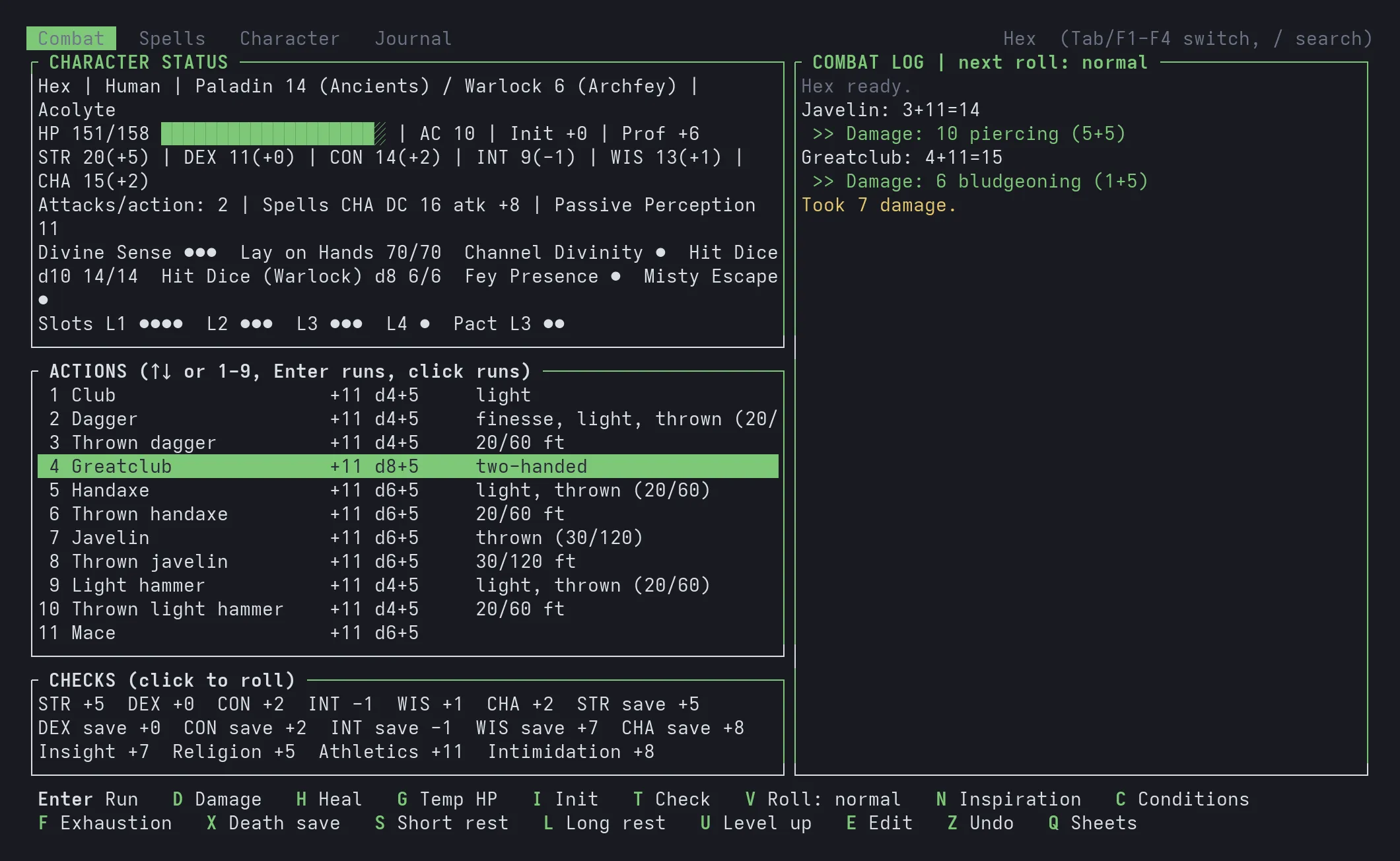
DND TUI is a character sheet for D&D 5th edition. It started as a small Python script to track one character at the table, and grew into a Rust app built with ratatui that runs in the terminal.
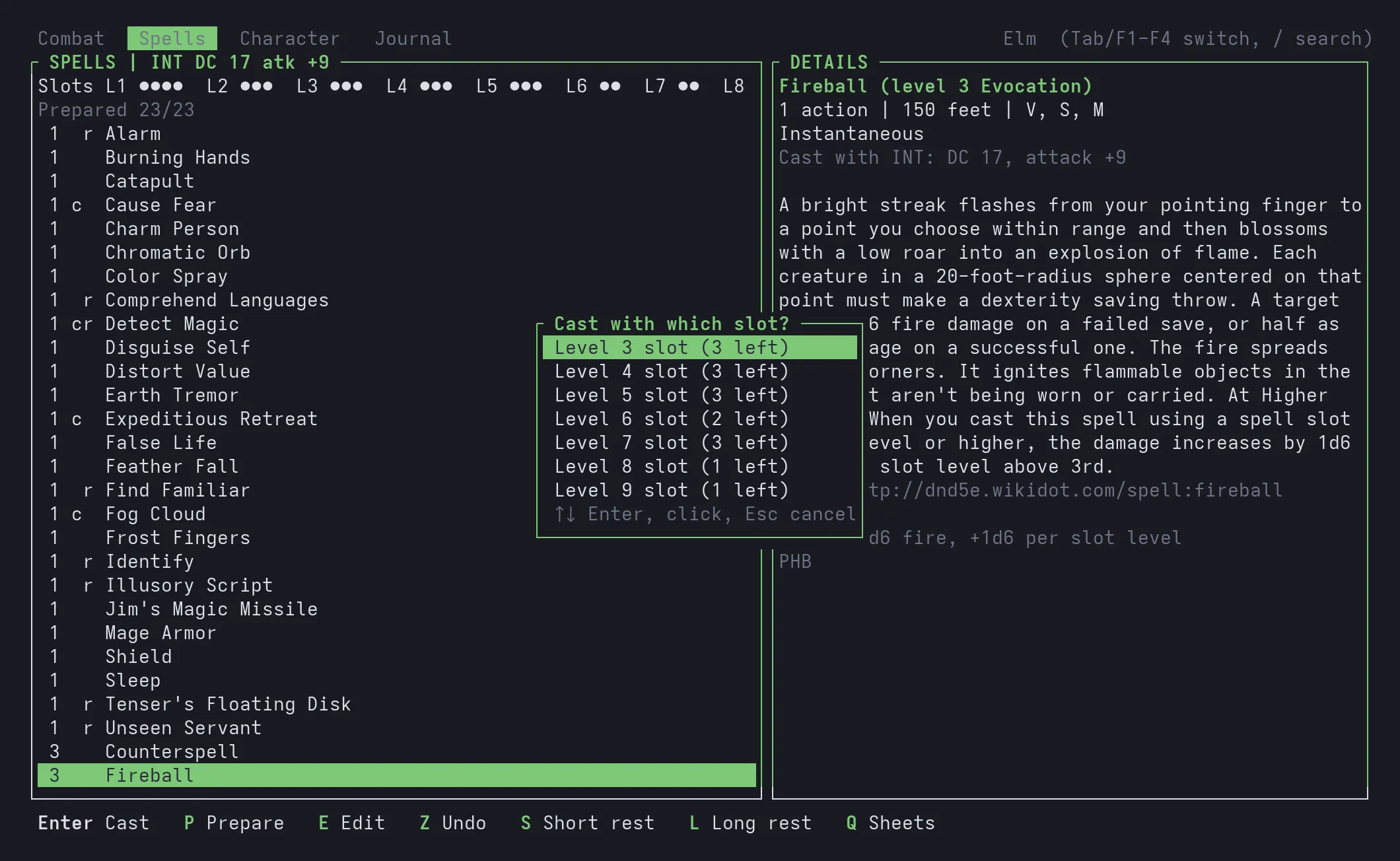
The idea is simple: the sheet should know the rules, so the player doesn’t have to do the arithmetic. Attacks roll with the right bonus, spells know their save DC and how their damage grows with the slot, rests give back what they should, and level up asks only the questions the class actually asks.
What it does
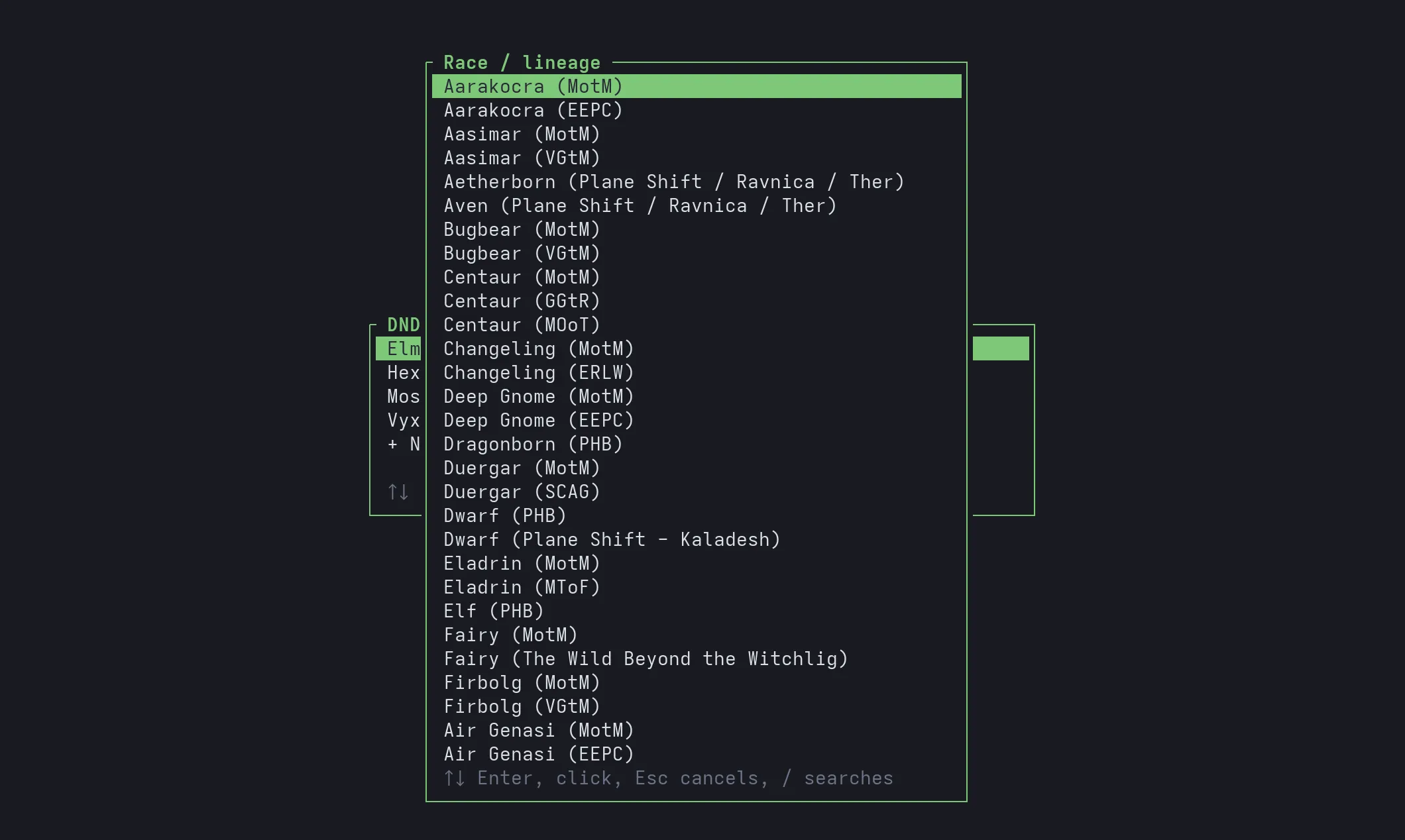
- Character creation in a guided wizard: race, class, background, abilities, spells, equipment, from level 1 or higher.
- All thirteen classes, the twelve of the Player’s Handbook plus the Artificer, with every PHB subclass, multiclassing and pooled spell slots.
- Combat: attacks, damage, temporary HP, concentration saves, conditions, exhaustion, death saves, short and long rests.
- Spellcasting: prepare and cast, upcasting, rituals, racial spells, class features like Metamagic or Arcane Ward.
- A printable sheet: any character exports to a PDF, for those who build with the app and play on paper.
In the browser, on a phone
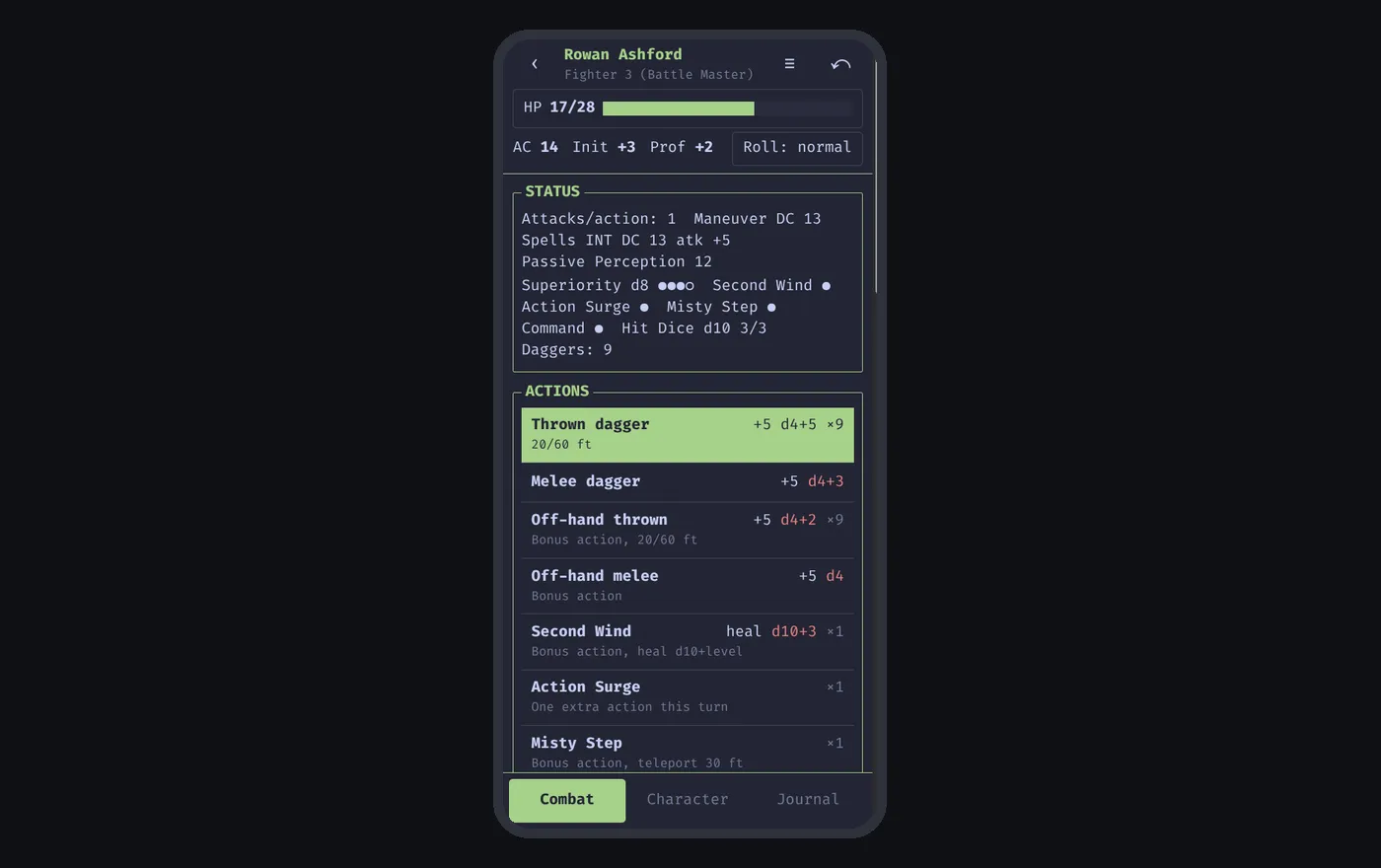
The terminal is great at a desk and awkward at a game table, so the same app also runs as a web page. The rules engine is compiled to WebAssembly and drawn as a touch interface that keeps the look of the terminal, green boxes and all: a sticky HP bar, actions, abilities and skills as buttons, questions as panels that slide up from the bottom. Nothing is installed and nothing goes to a server: sheets stay in the browser, and can be exported and imported as files.
How it’s built
The rules data comes from public sources, turned into JSON lists by small Python generators. Every class is tested against its official table at levels 1, 5, 11 and 20, and spell damage is checked against a second independent source, so a wrong number fails a test before it reaches a game. The terminal and the web page share one engine: the web page only draws its state and sends taps back as the same commands the keyboard sends.
It’s open source under GPL-3.0. Version 0.9.4 is out for Linux, macOS and Windows, and the next step is playtesting it at a real table.