The Habit of Having Habits
Here's something no self-help book will tell you on the cover: the advice works. You're the part that doesn't.
Here’s something no self-help book will tell you on the cover: the advice works. You’re the part that doesn’t.
I know because I’ve read them. Atomic Habits. Slow Productivity. The Power of Habit. A few others I’m too embarrassed to name. My bookshelf looks like the waiting room of a person who is about to change their life any minute now.
Any minute now.
The books are right (that’s the annoying part)
I want to be fair, because these are not bad books. They’re good books. Annoyingly good.
James Clear tells you to get 1% better every day and let compound interest do the rest. He tells you that every action is a vote for the type of person you want to become. Cal Newport tells you to do fewer things, work at a natural pace, and obsess over quality. Charles Duhigg breaks every habit into cue, routine and reward, like a mechanic opening up an engine.
All of it makes sense. All of it is backed by research, examples, and a nice chapter summary at the end.
I read the summary. I underline it. I nod.
Then I close the book and go back to being exactly who I was.
My graveyard of habits
Let me show you the cemetery.
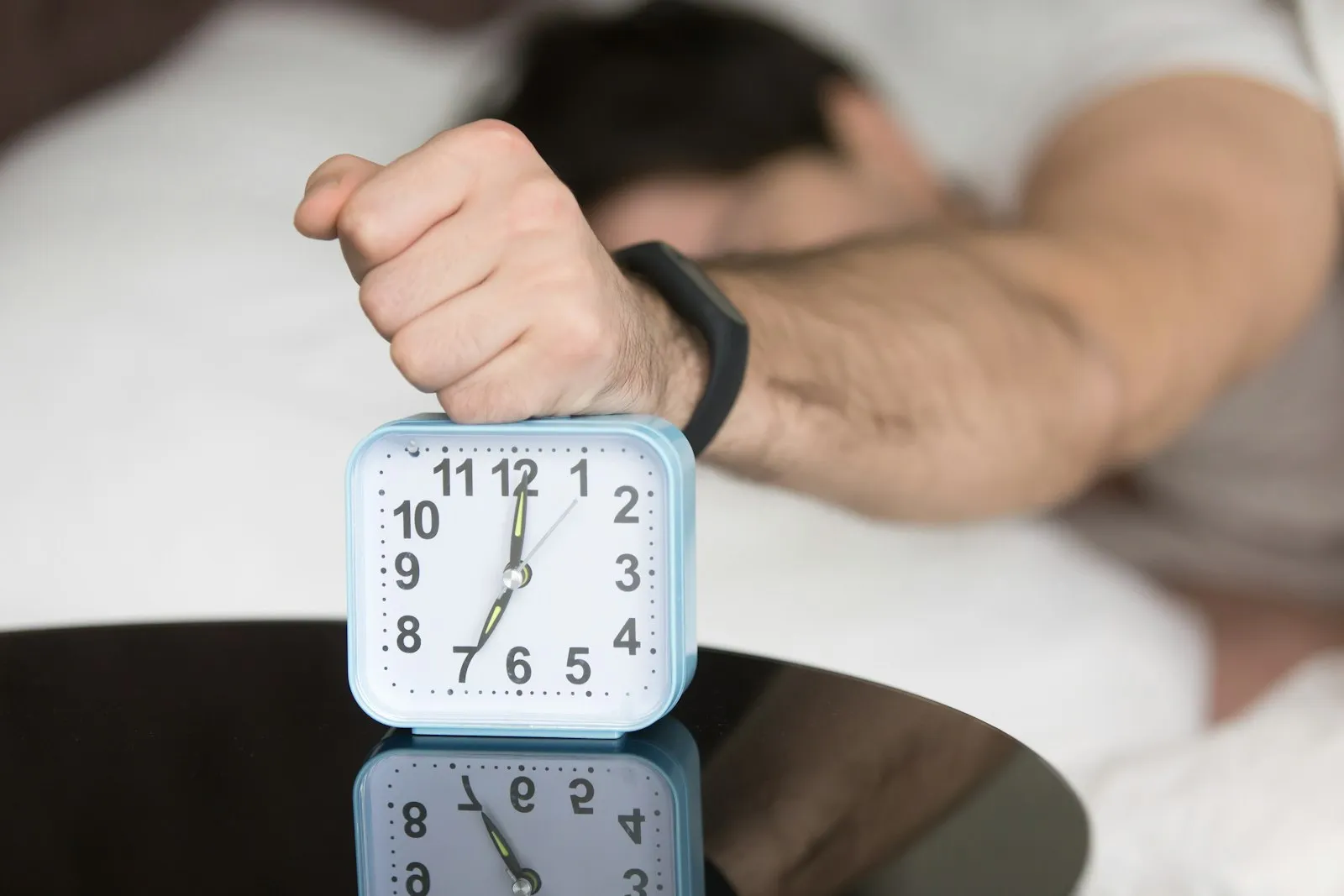
The 6 AM alarm. It lasted nine days. On the tenth day I realized I was awake at 6 AM to do the same things I used to do at 8, only more tired. The plan, of course, was also to go to bed early. The plan did not survive the first good series on a Tuesday night. I still want this one, by the way. I really do. It just refuses to become mine, like a cat that eats your food and still sleeps at the neighbor’s.
Reading. Yes, the irony is not lost on me. I read books about building habits, but I can’t build the habit of reading. I go through three books in two weeks and then nothing for two months. My reading has seasons, like the weather, and about the same level of planning.
Journaling. I have four notebooks with the first twelve pages filled in. Collectively, they’re a very detailed record of every January. The rest of the year, the notebook only comes out when I’m really stressed. It stopped being a daily practice and became an emergency exit. Which, to be fair, is still something. Just not what the book promised.
Yoga in the morning. One month. One full month of mat, breathing and stretching before coffee. Then one morning I skipped it, and the next morning skipping was easier, and by the third week I couldn’t remember why I had started. I didn’t lose the discipline first. I lost the interest. The discipline just followed it out the door.
And then there’s the phone. The only one that survived. I moved the apps, set the screen to grayscale, put the charger in the kitchen. For weeks my thumb kept finding the apps anyway. Thumbs have a better memory than people. But this one, slowly, stuck. I’m still not sure if I won or if my thumb just got bored.
None of the ones that died failed because I didn’t know how. I knew exactly how. I had the book. I had the system. I had the habit tracker with the little boxes.
What I didn’t have was the ability to get used to it.
Getting used to getting used to
In Italian there’s a sentence I keep repeating to myself: mi devo abituare ad abituarmi. It translates, more or less, to “I need to get used to getting used to things.”
It sounds like a joke. It sounds like a tongue twister your uncle says after the second glass of wine (the fifth, if your uncle is from Veneto like mine). But I think it’s the most honest thing I can say about habits.
Every book focuses on the habit itself. What to do, when to do it, how to stack it, how to make it obvious, attractive, easy and satisfying. But between the old you and the new habit there’s a phase nobody really designs for: the weird, uncomfortable middle. The part where the new thing doesn’t feel like yours yet and the old thing hasn’t left yet.
That middle is where I always die.
Not because it’s hard in a heroic way. It’s hard in a boring way. It feels wrong. Like wearing someone else’s shoes that are technically your size.
So the real skill isn’t yoga, or waking up early, or writing in a notebook. The real skill is tolerating that feeling of wrongness long enough for it to stop being wrong.
Getting used to getting used to.
We are our habits
And here’s the part I didn’t expect.
Clear says you should focus on identity: don’t try to run, become a runner. Which is beautiful advice. But nobody tells you the other side of that sentence. If you become a new person, the old one has to go somewhere.
And I kind of liked the old one.
My bad habits aren’t just bad habits. They’re also my habits. The coffee I drink standing up in the kitchen while scrolling news I don’t care about. The late nights. The way I procrastinate by cleaning my desk. It’s not a great list. But it’s my list. It’s the shape of my days, and the shape of my days is, if I’m honest, the shape of me.
We like to think we’re something deeper than our routines. A soul, a personality, a set of values. Maybe. But most of what other people see of us, and most of what we feel of ourselves, is repetition. What we do every morning. What we reach for when we’re bored. Where our hands go when we’re anxious.
Change enough of those and one day you look around and don’t fully recognize the person living your life.
Which is maybe the goal. But it’s also a little bit scary. And I think that fear, not laziness, is the real reason so many of us quit on day ten.
It’s not that we can’t change. It’s that every change is a small goodbye, and nobody likes saying goodbye to themselves.
So what do I do now?
I stopped trying to become a new person in a month.
Now I change one thing at a time, and I change it slowly. Slower than the books suggest. Slow enough that I don’t feel like a stranger in my own morning.
And I keep one old habit around on purpose. An anchor. Something that reminds me I’m still me while the rest moves. For me it’s the coffee in the kitchen. The scrolling can go. The standing up stays.
It’s less impressive than a 5 AM club membership. It won’t make a good thumbnail. But it’s the first time the changes are actually sticking.
Turns out the most important habit isn’t in any of the books.
It’s the habit of having habits.
I’m still getting used to it.